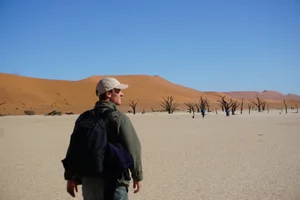
14-Day Namibia Road Trip Itinerary: Desert, Coast & Wildlife
Fourteen days is enough time to drive Namibia properly: from the quiet trails of Naukluft to the towering red dunes of Sossusvlei, the fog-wrapped coast of Swakopmund, and the wildlife-packed plains of Etosha, without feeling like you're racing the clock between stops.
Below you’ll find the itinerary we followed, driving rented 4x4s with rooftop tents, and just enough structure to leave room for the days that don't go as planned.
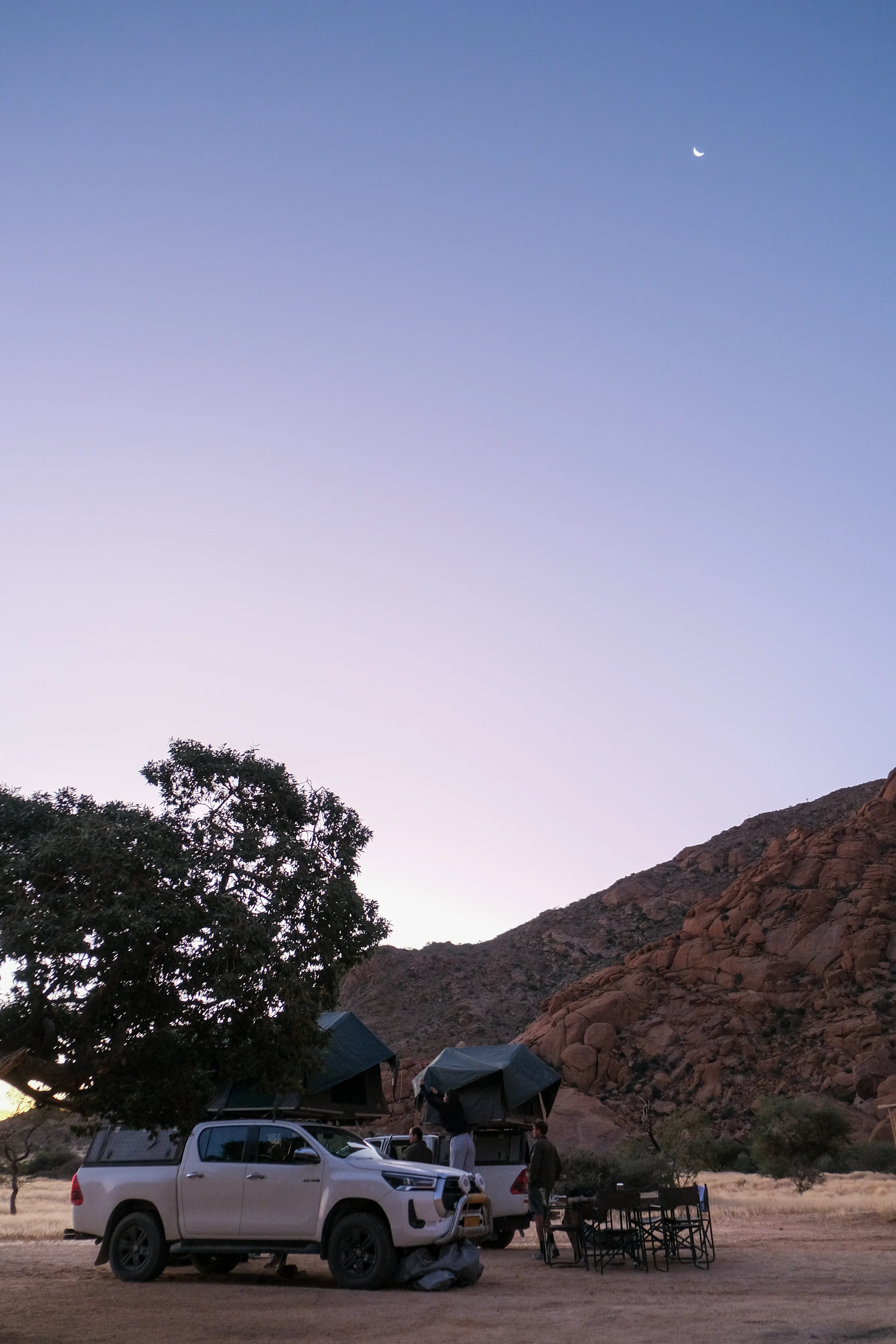
How Long Do You Need for a Namibia Road Trip?
Fourteen days is the sweet spot for a Namibia road trip. It's long enough to cover the country's essential loop — desert, coast, and safari — without the exhausting back-to-back driving days that shorter trips force on you, and it leaves room for the two or three unplanned moments that end up being the ones you remember. Namibia rewards slowness: the distances are vast, the roads are mostly gravel, and rushing it defeats the point of going at all.
This the shape of the trip below. It's a loop, more or less, starting and ending in Windhoek, with a 4x4 and rooftop tent as home base throughout.
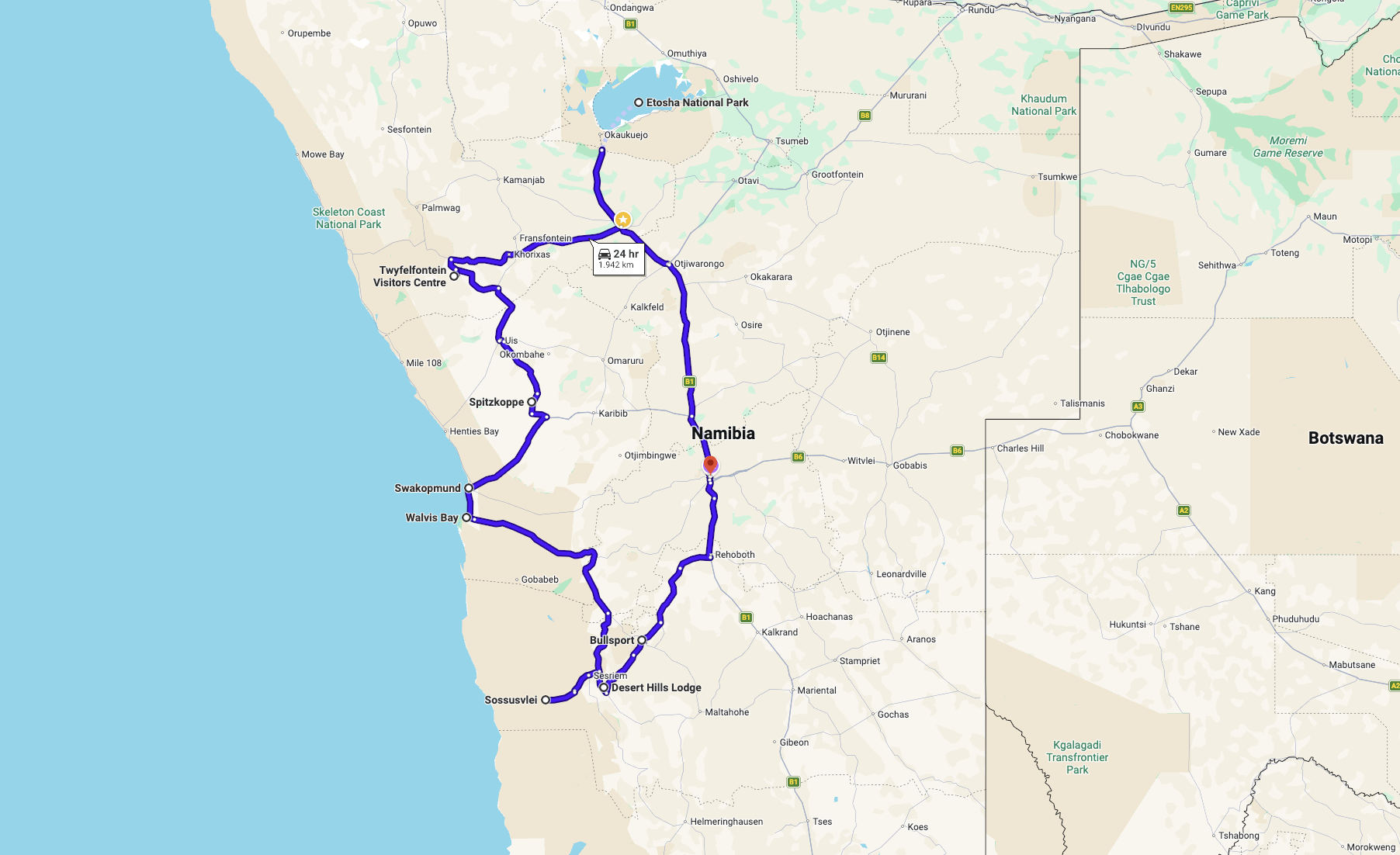
If you have a few more days to spare, even better. That should give you time to add other highlights to your trip like fish river canyon, skeleton bay, and the Epupa Falls near the border of Angola.
Day 1: Arrival in Windhoek
Every Namibia road trip starts the same way: touch down at Hosea Kutako International Airport, collect the keys to your 4x4, and spend the first night in Windhoek rather than pushing straight out into the country. We picked up our vehicle — tented, with a full camping kit stowed in the back — and used the afternoon to double-check gear, stock up on water and snacks for the days ahead, and get a feel for driving on the left before the gravel roads started in earnest.
It's tempting to skip this and drive straight out, but resist it. Namibia's distances are long enough that arriving rested matters more than arriving fast, and Windhoek is a low-key, easy place to spend one night before the real trip begins.
What to sort out on Day 1:
Confirm your 4x4's spare tyres, tools, and camping equipment before leaving the rental yard
Buy bottled water and non-perishable snacks — shops thin out fast once you're on the road
Get a local SIM card if you'll need connectivity; coverage drops off quickly outside the main towns
Do You Need a 4x4?
You don't strictly need a 4x4 for every road in Namibia. Some sections, like the tarred stretch from Windhoek to Rehoboth, are fine in a normal sedan. But the moment you leave the main highways, high clearance and four-wheel drive stop being a luxury and start being the plan. Between gravel corrugations, sandy patches near the dunes, and long stretches with no help in sight if something goes wrong, a proper 4x4 is the difference between a good day and a very long one.
We rented our 4×4 cars at Safari Car Rental Namibia.
Days 2-3: Windhoek to Naukluft National Park
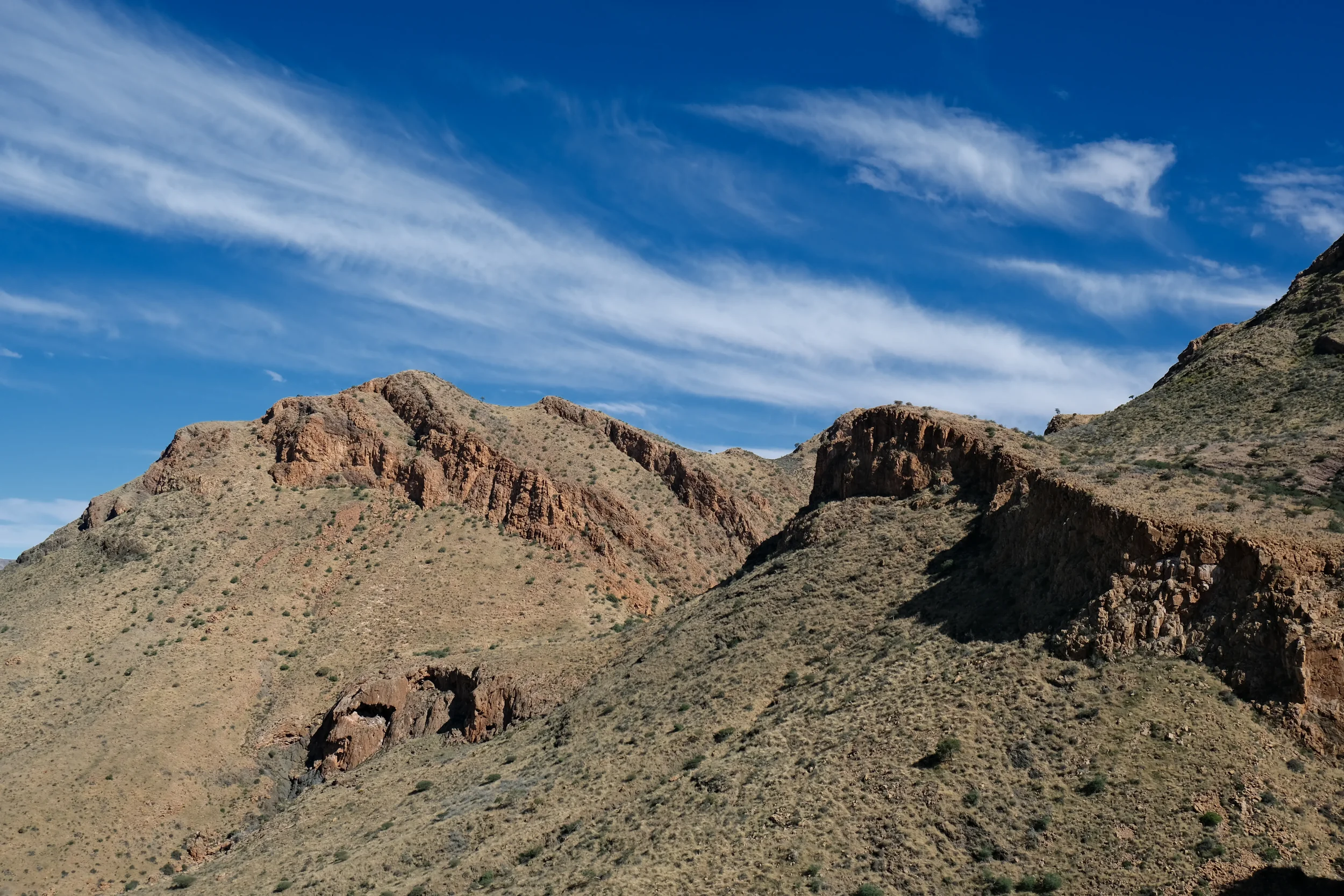
From Windhoek, the road turns to gravel almost immediately, and so does the character of the trip. Naukluft is remote and quiet, the kind of place where you go a long time between other cars.
The highlight here is the Olive Trail, a hike through rocky gorges where zebras, baboons, and even wild horses wander past as if you're not there at all. It's an early, unhurried introduction to a landscape that only gets stranger and more beautiful from here.
Day 4: Sesriem
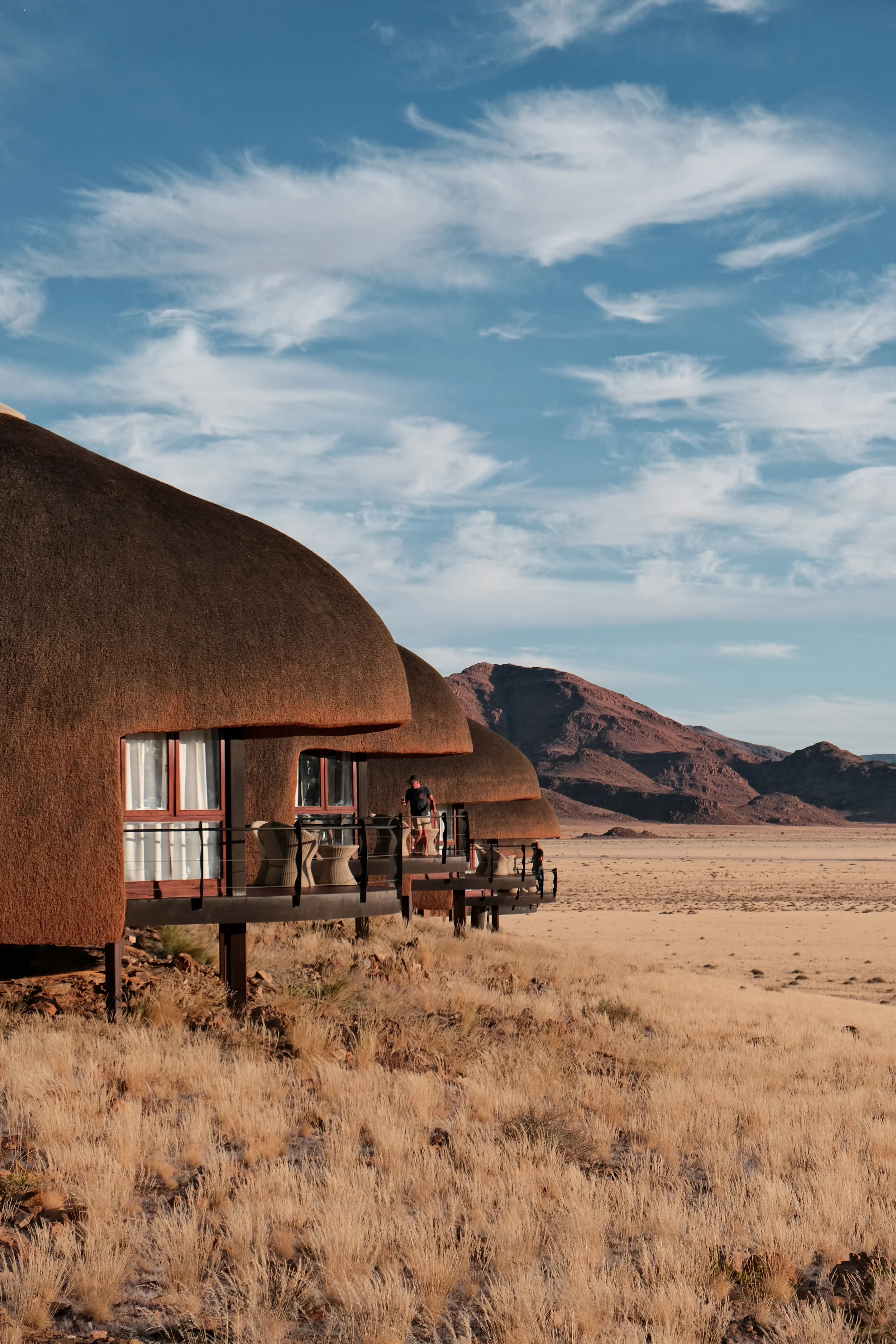
From Naukluft, the landscape opens into something that stretches further than you can really process; flat, golden, endless. We stayed at Desert Hills Lodge, tucked right into that vastness, and spent the evening doing nothing but watching the light change over the plains. An absolute must-stay.
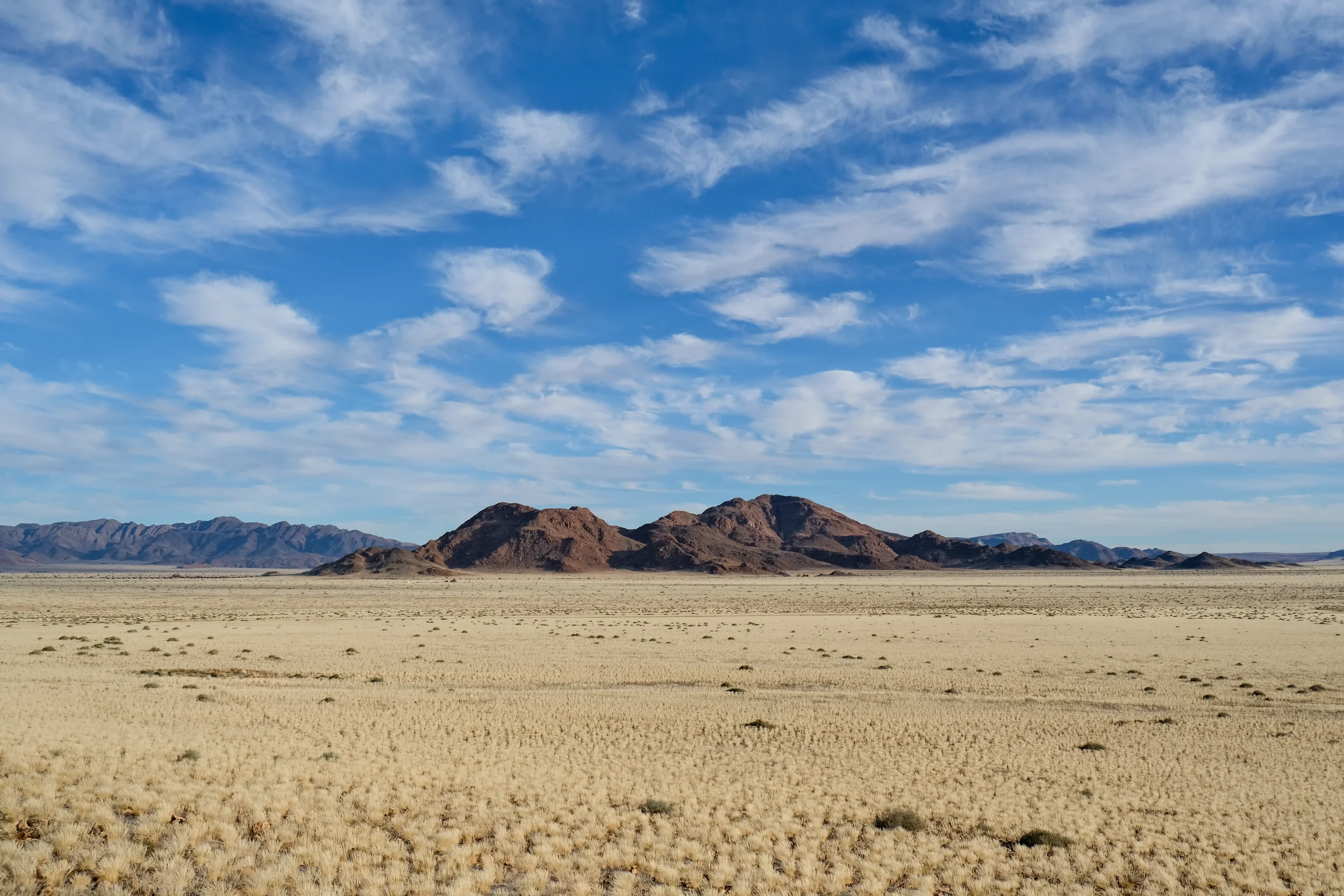
Some days on a Namibia road trip are about doing. This one isn’t.
After the driving and hiking of the previous days, Desert Hills is one of those places where the trip's rhythm shifts. A reminder that the empty, quiet stretches are as much a part of Namibia as its famous landmarks.
Days 5–6: Sossusvlei & Deadvlei
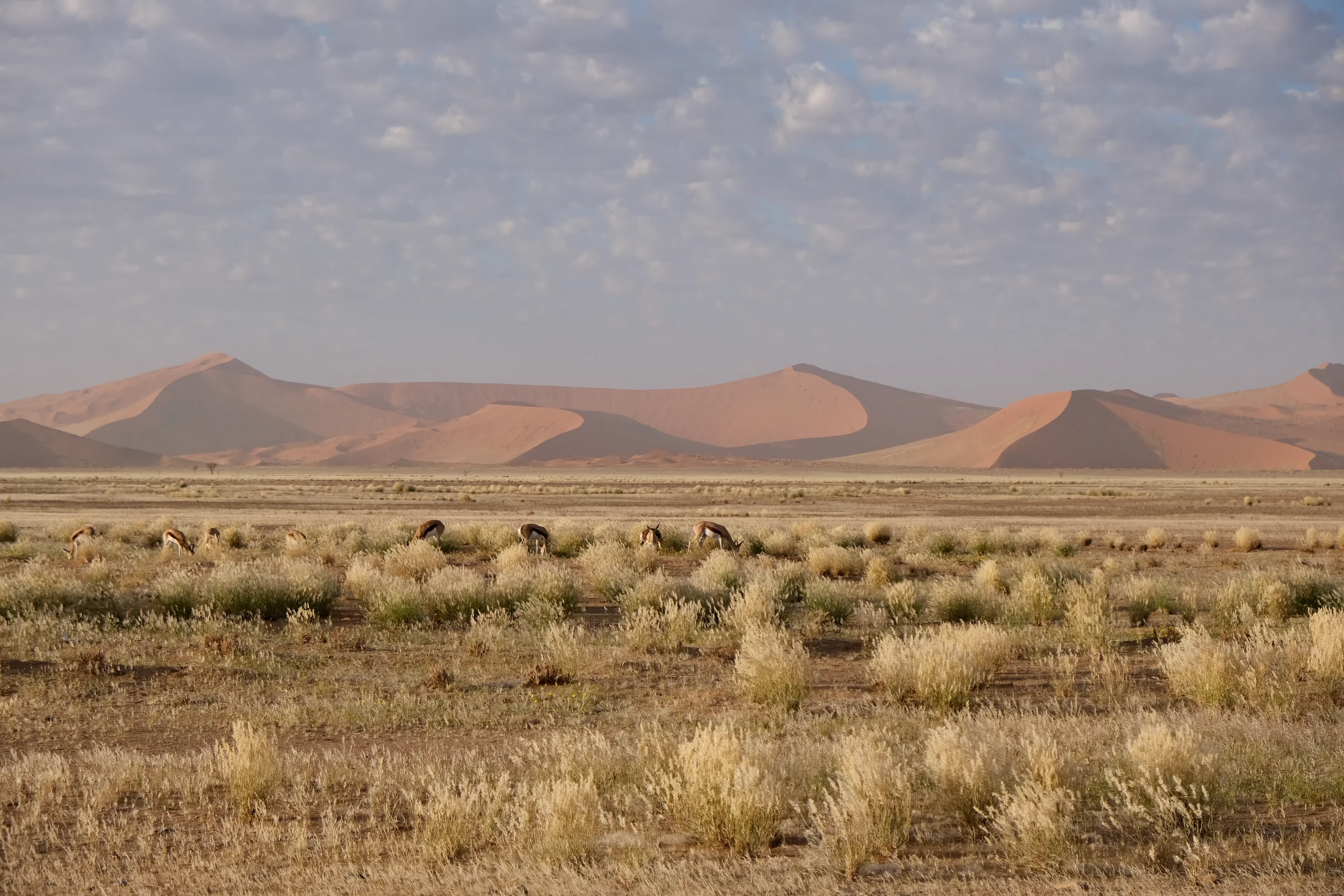
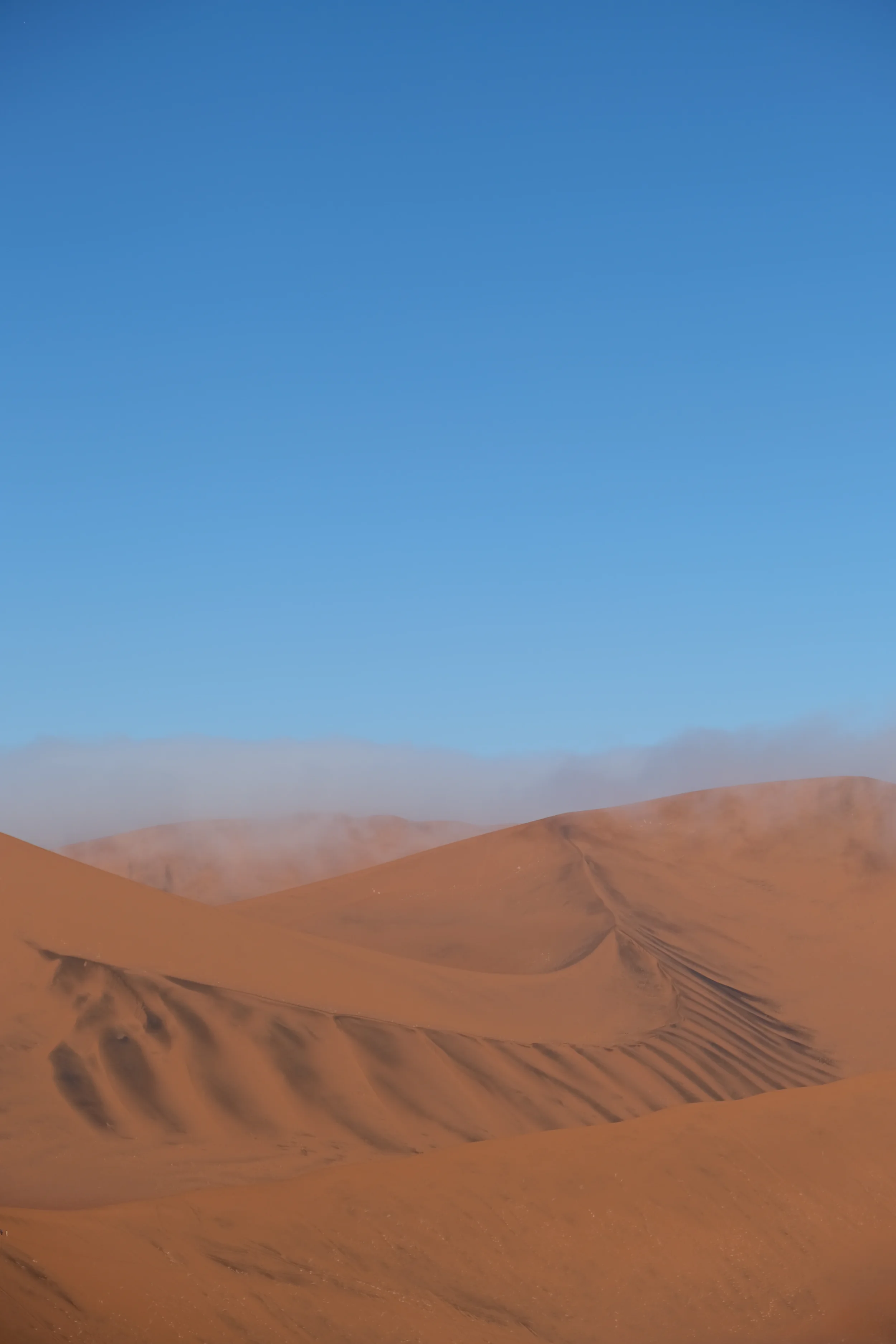
This is the day most people build the entire trip around. Sossusvlei sits within the Namib Sand Sea, the only coastal desert on Earth with extensive dune fields shaped by fog.
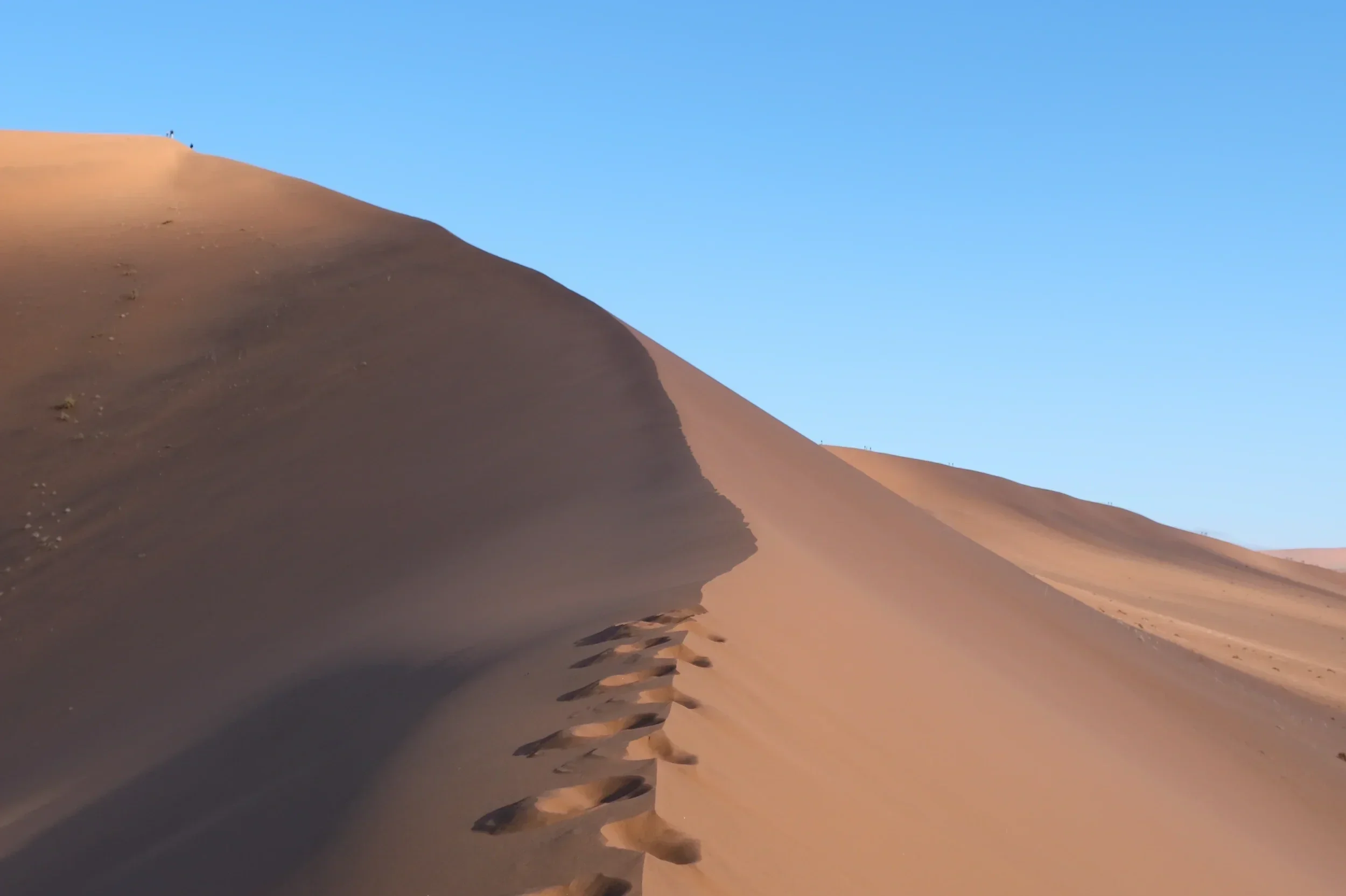
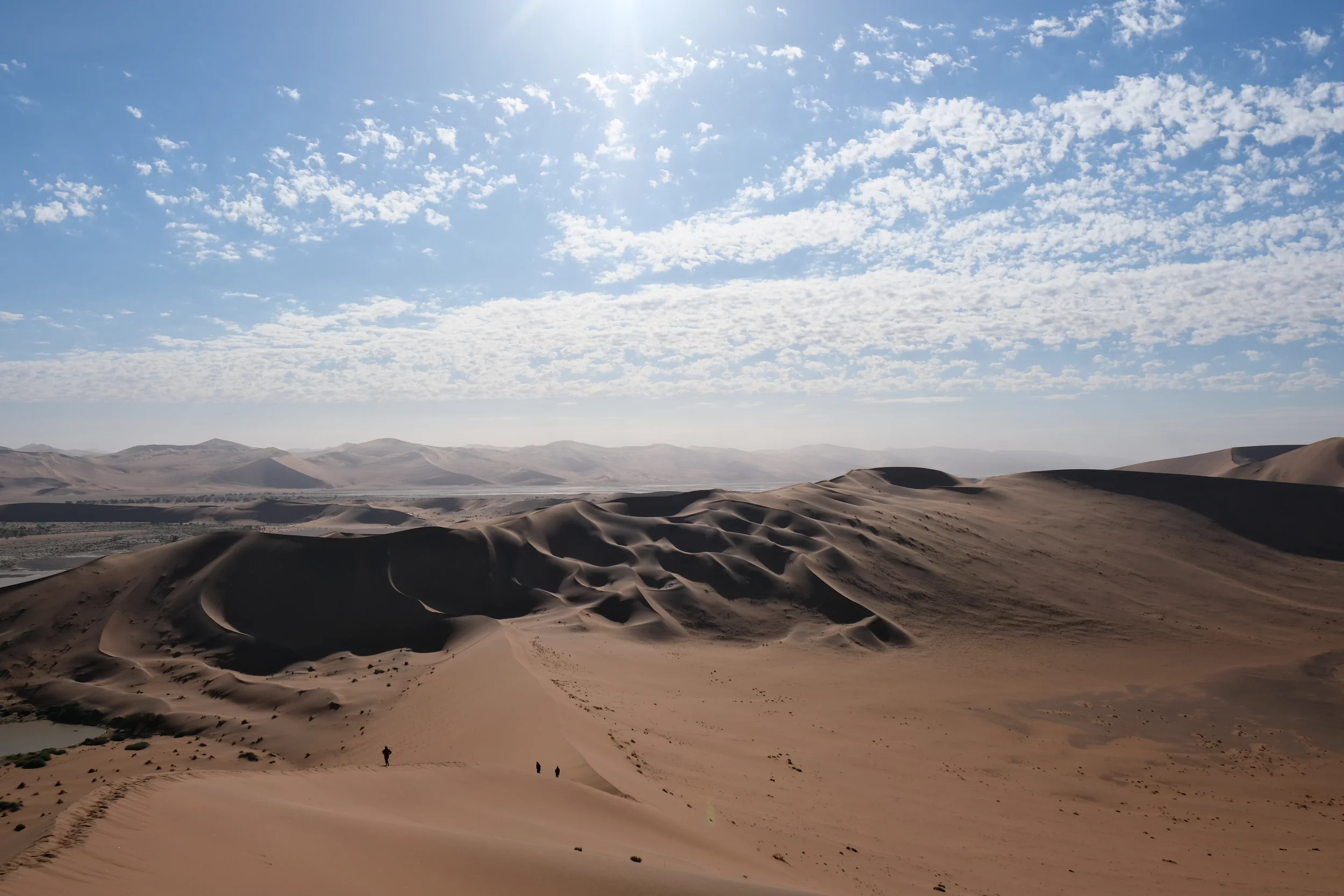
A landscape so distinct it earned UNESCO World Heritage status. Its dunes, including the famous Big Daddy, rise as high as 325 metres, making them some of the largest sand dunes in the world.
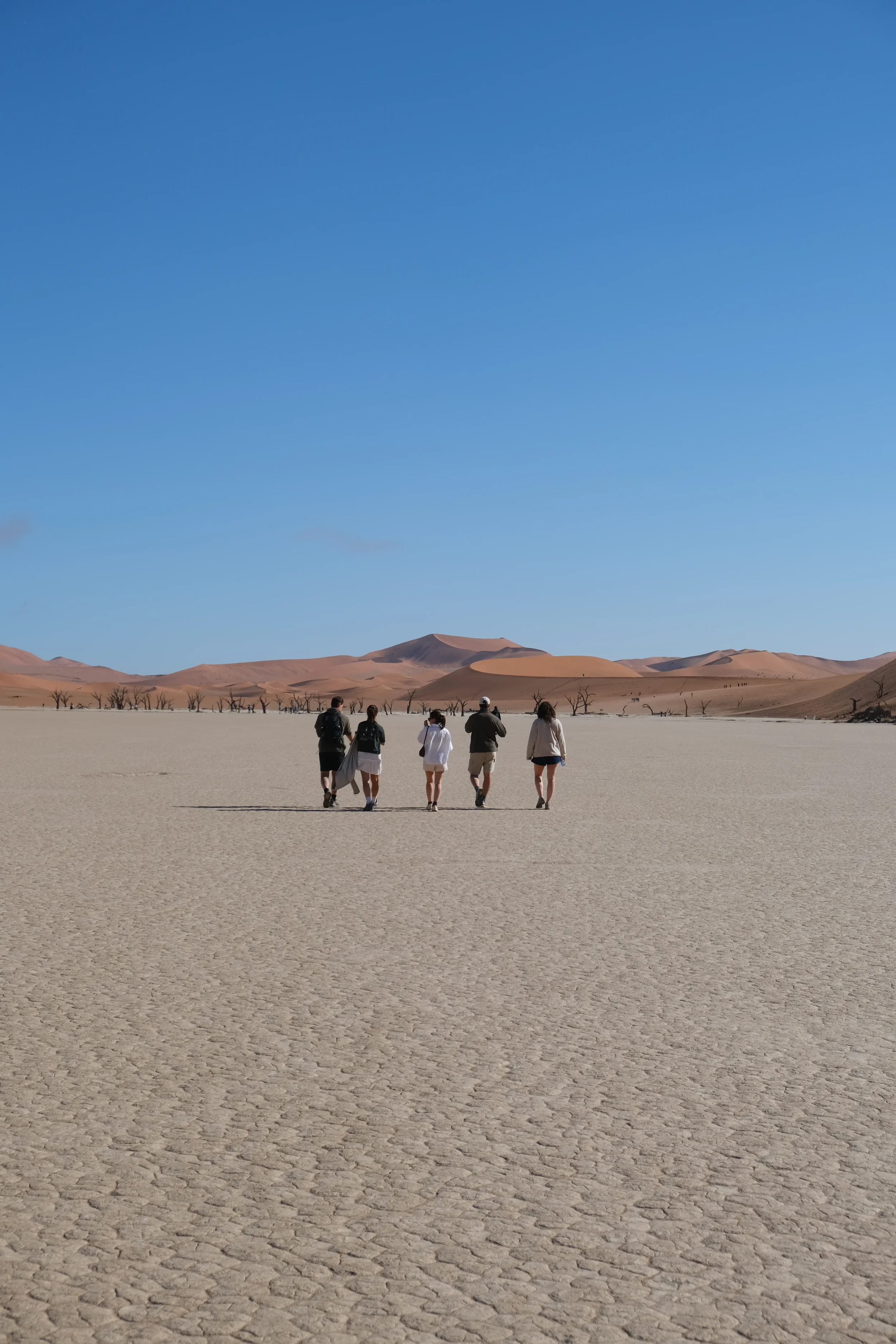
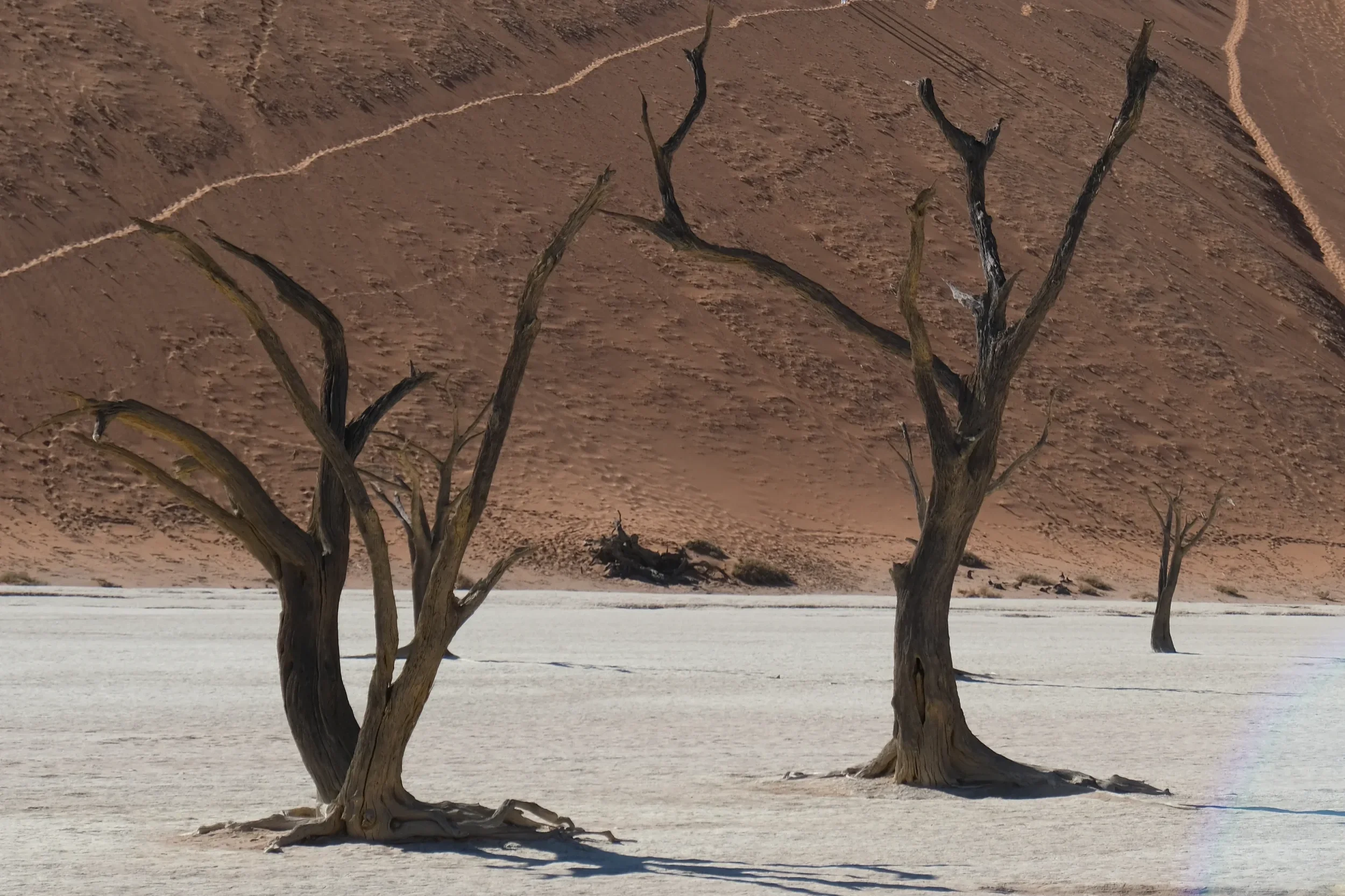
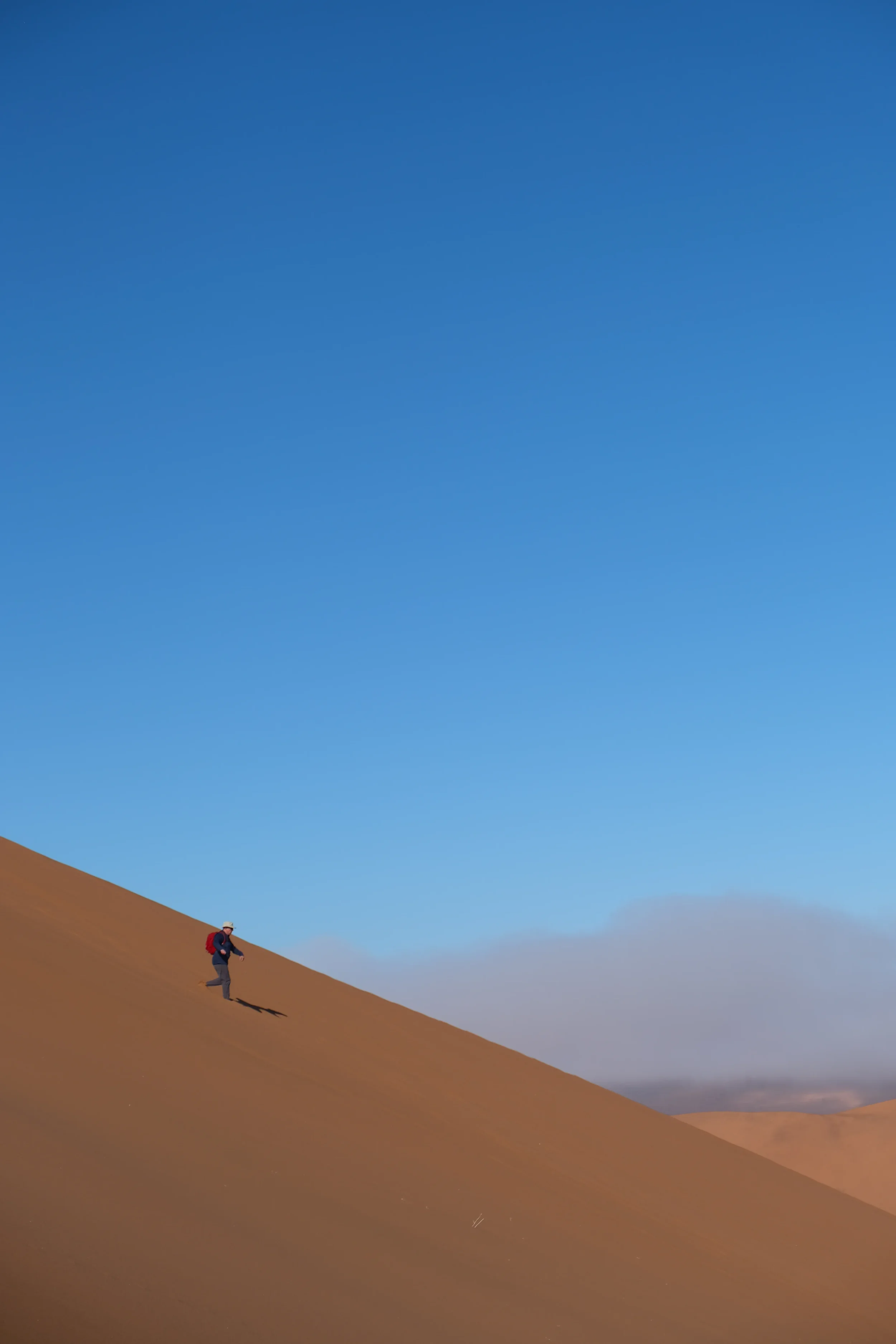
We climbed Big Daddy at sunrise. Legs burning. Sand everywhere. But 100% worth it when standing at the top and looking out over Deadvlei's cracked white clay and centuries-old dead trees.
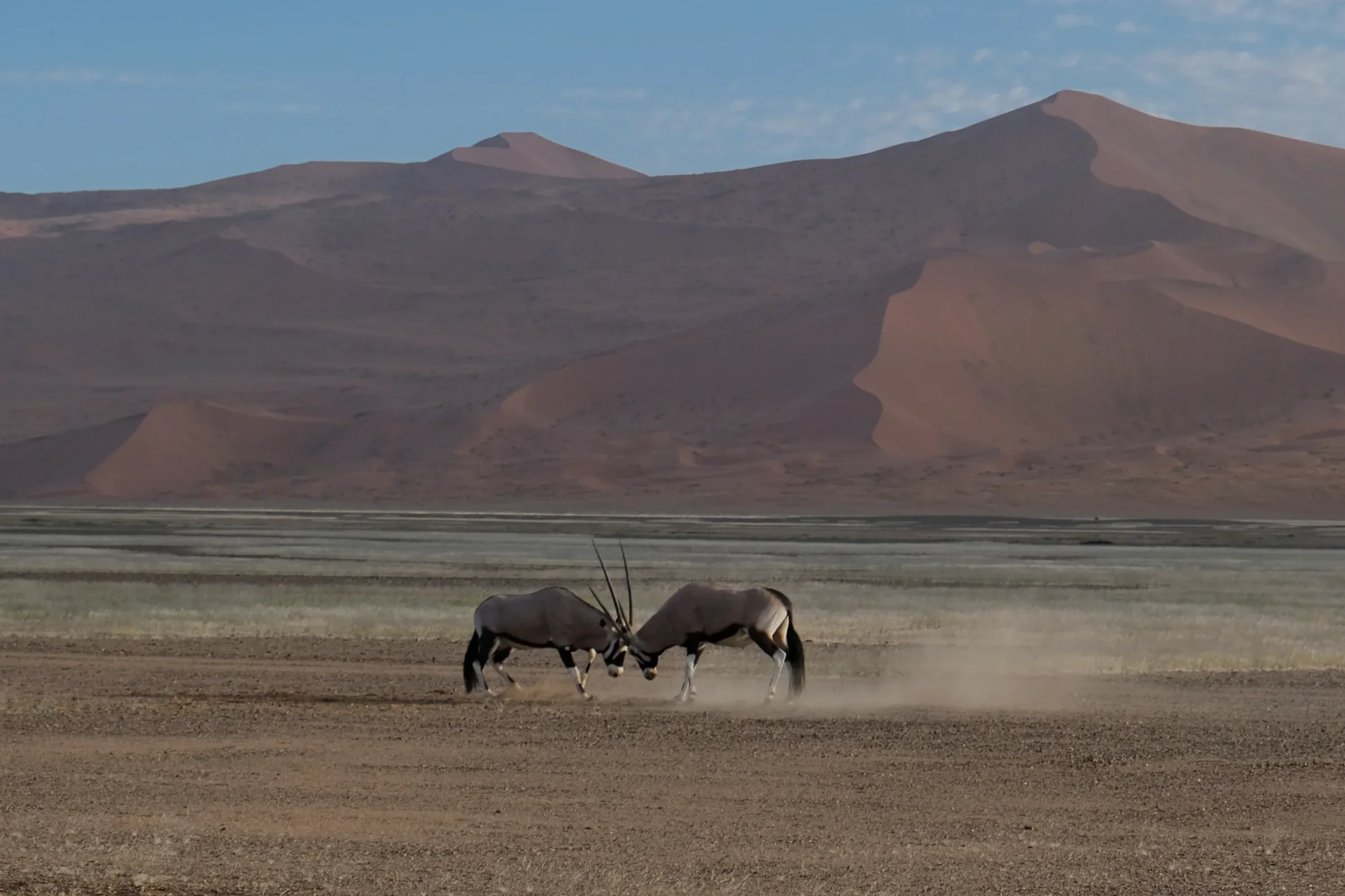
On the drive in, oryx grazed by the roadside, and hyenas and jackals slipped between the dunes. It's the kind of scenery that photos never quite capture, though we tried anyway.
Planning your time here:
Enter the park gate at sunrise for the coolest temperatures and the best light for photography.
Bring more water than you think you need; there's no shade once you're on the dunes.
Give yourself two full days. One is rarely enough to properly experience both Sossusvlei and Deadvlei.
Days 7–8: Swakopmund & Sandwich Harbour
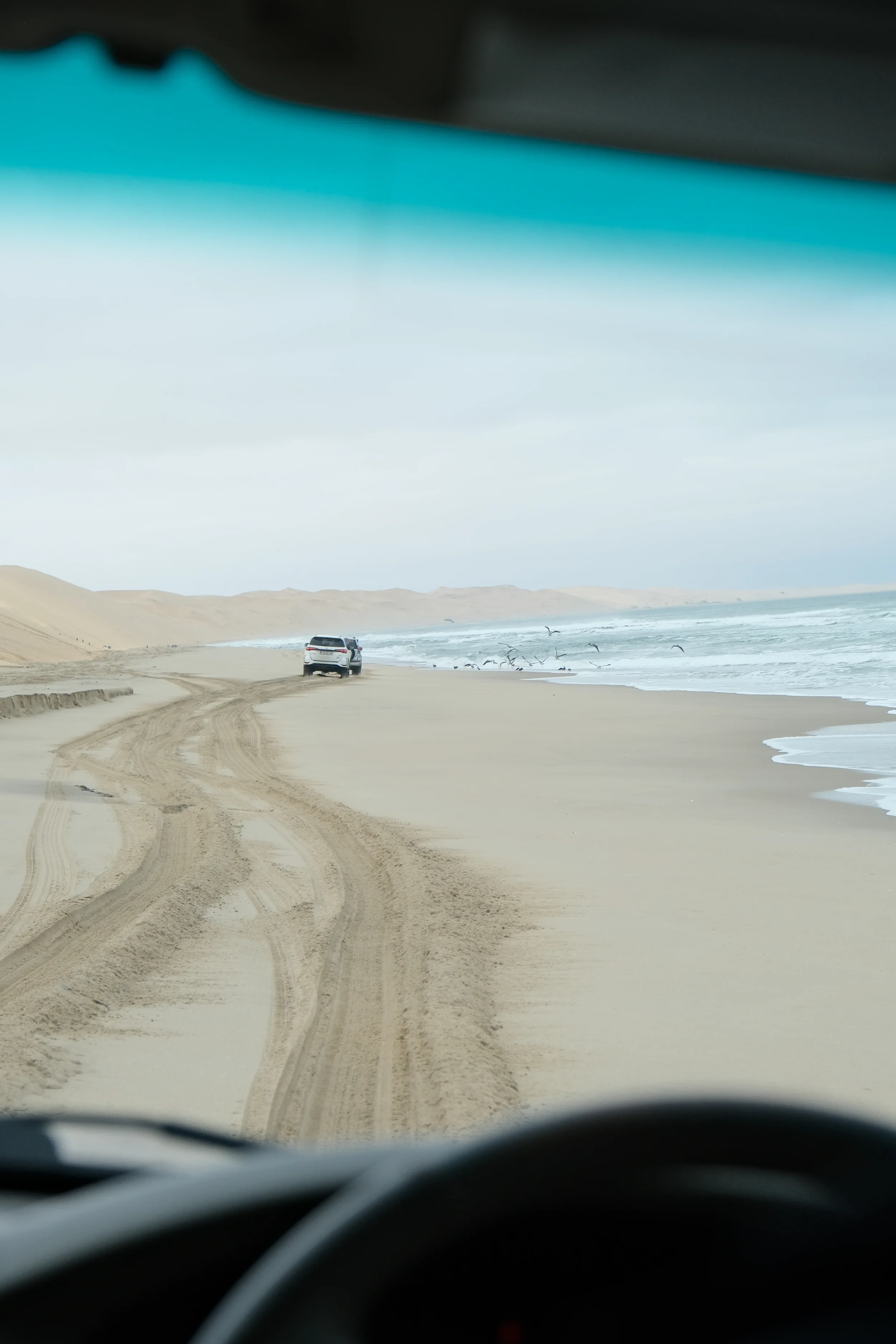
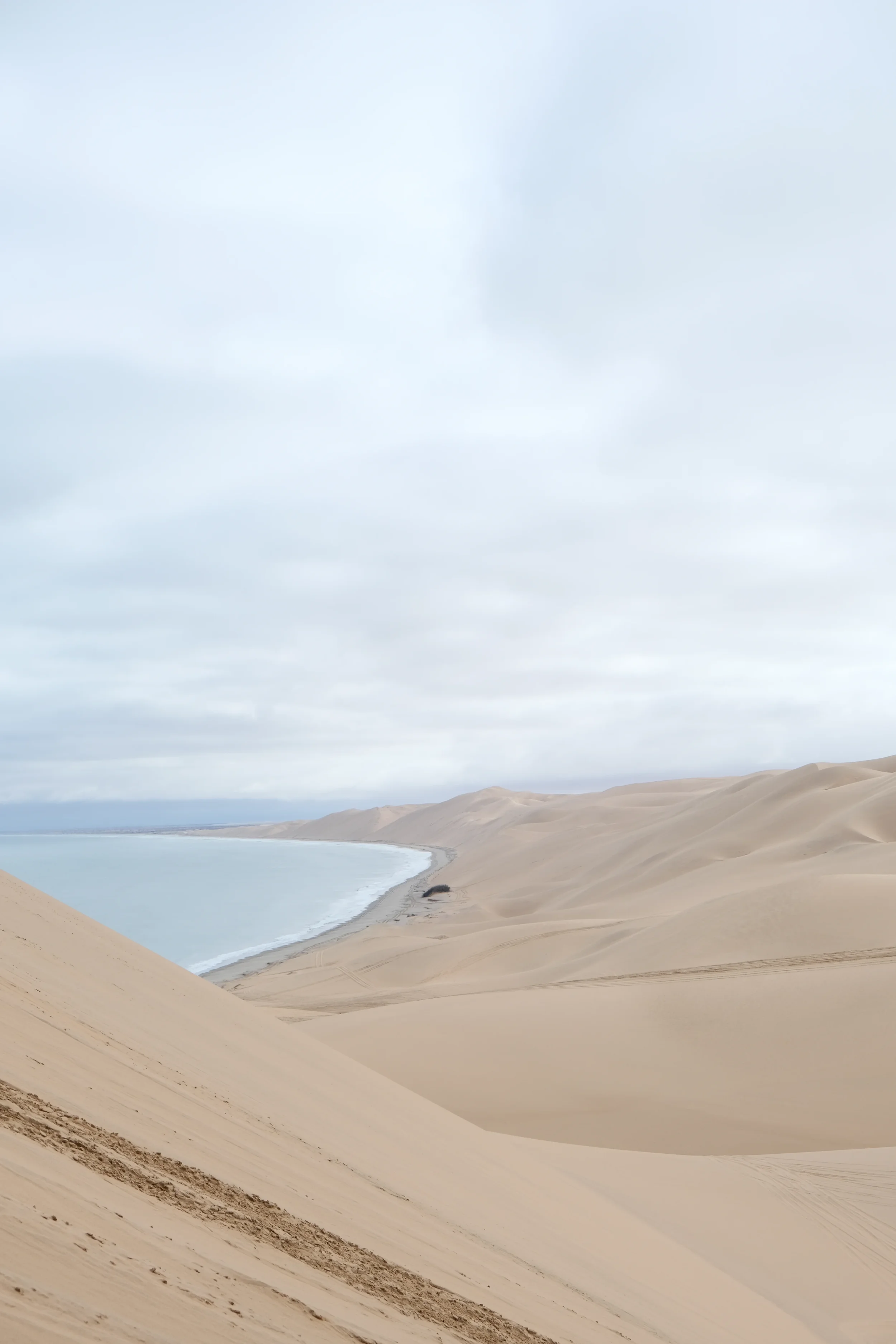
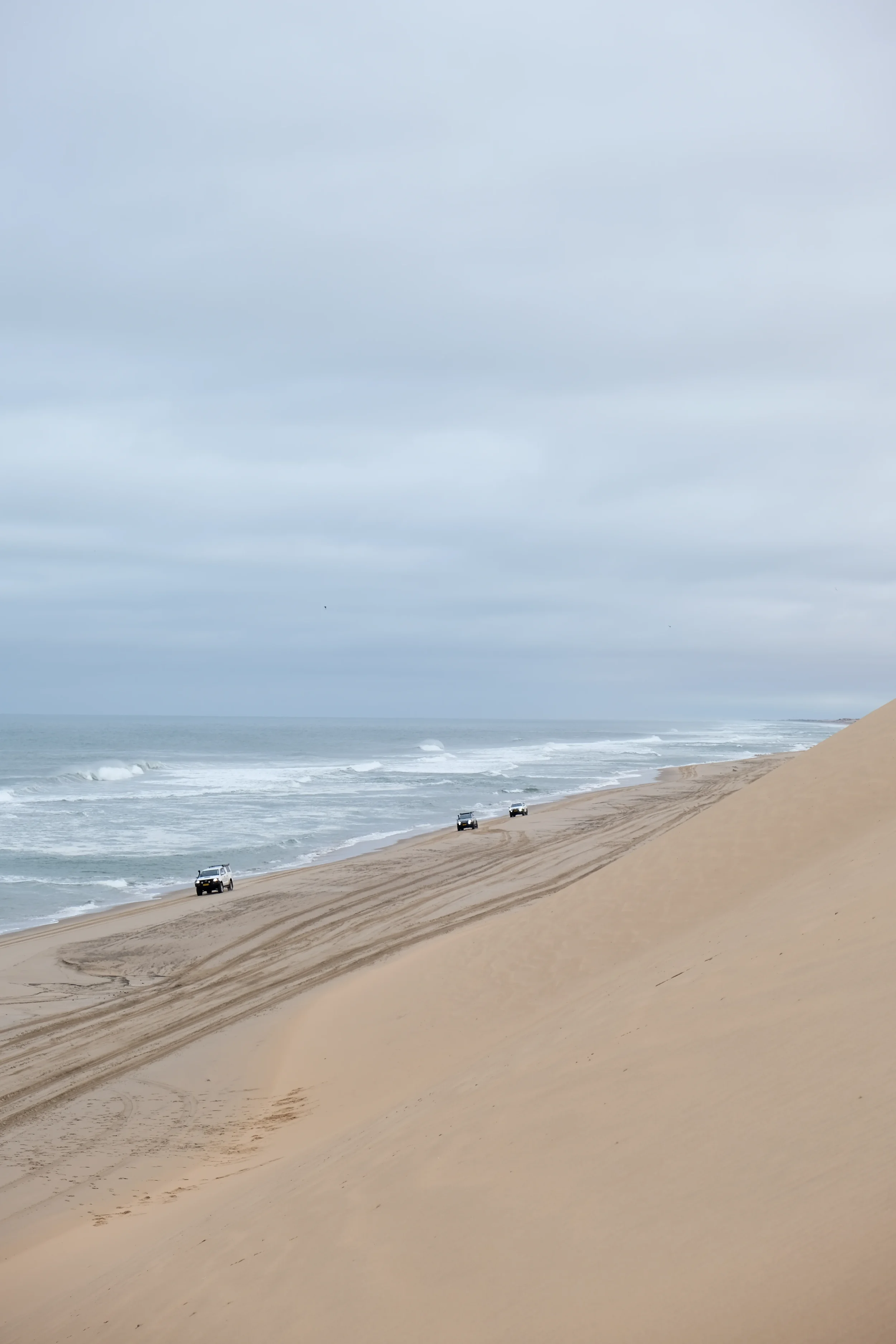
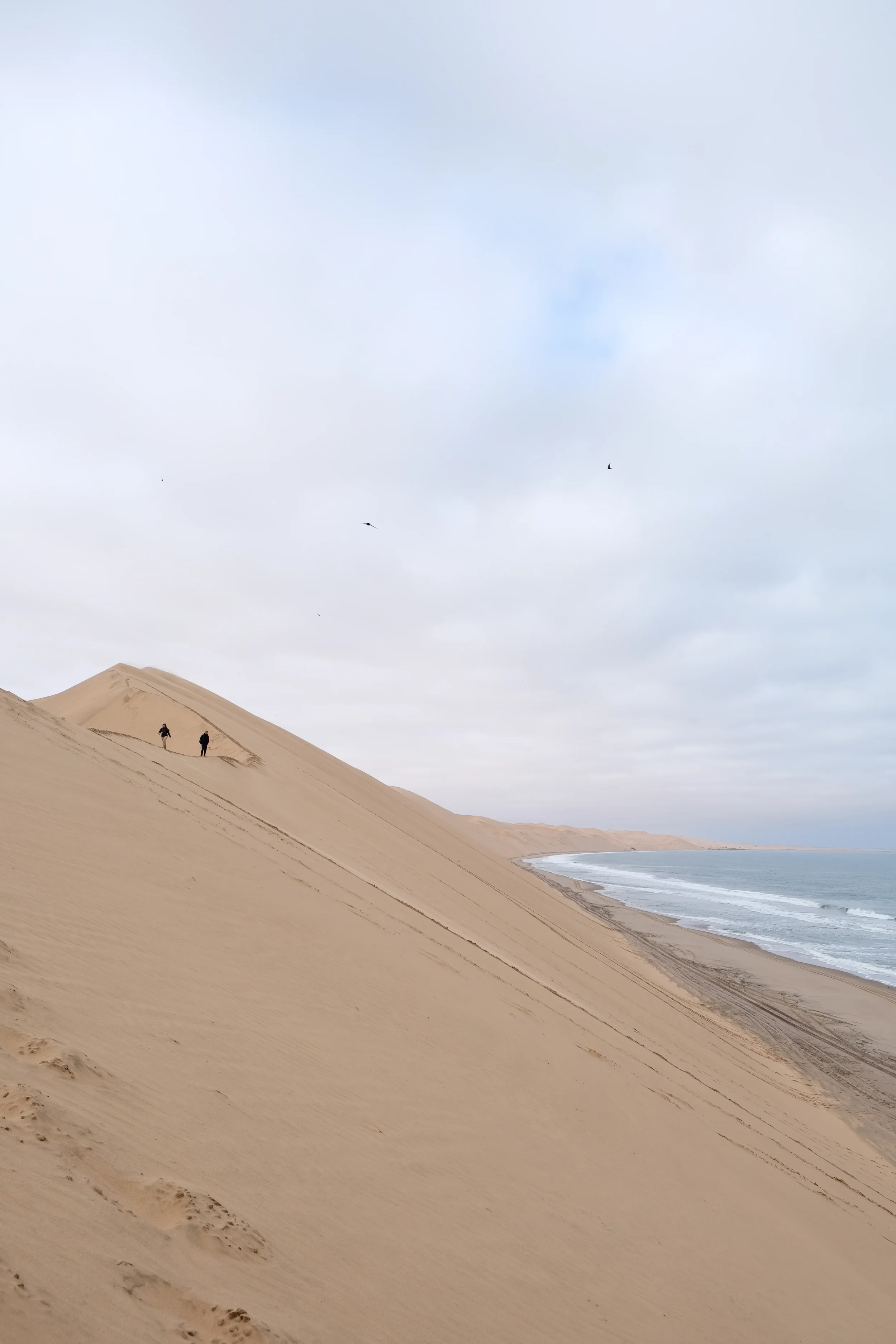
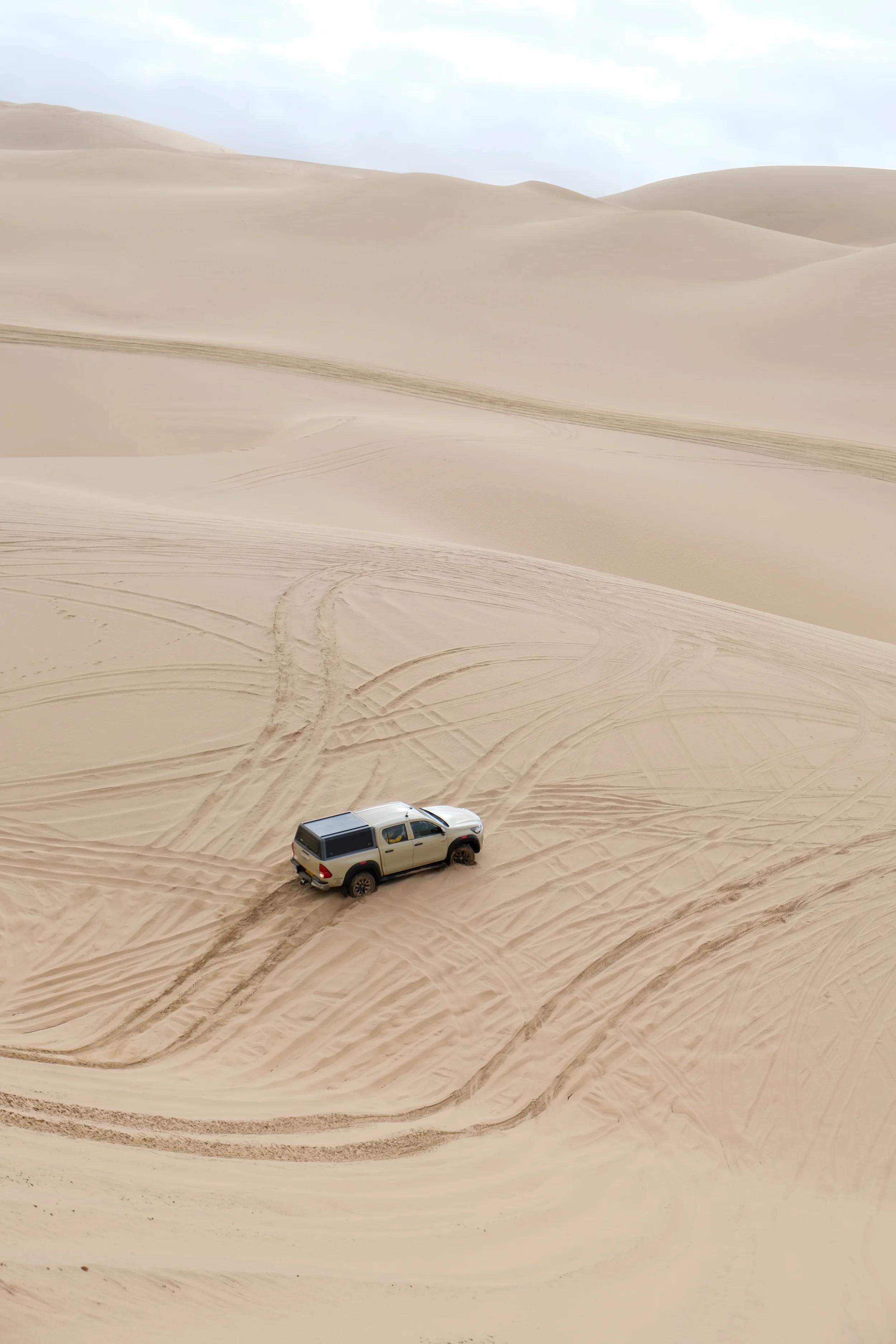
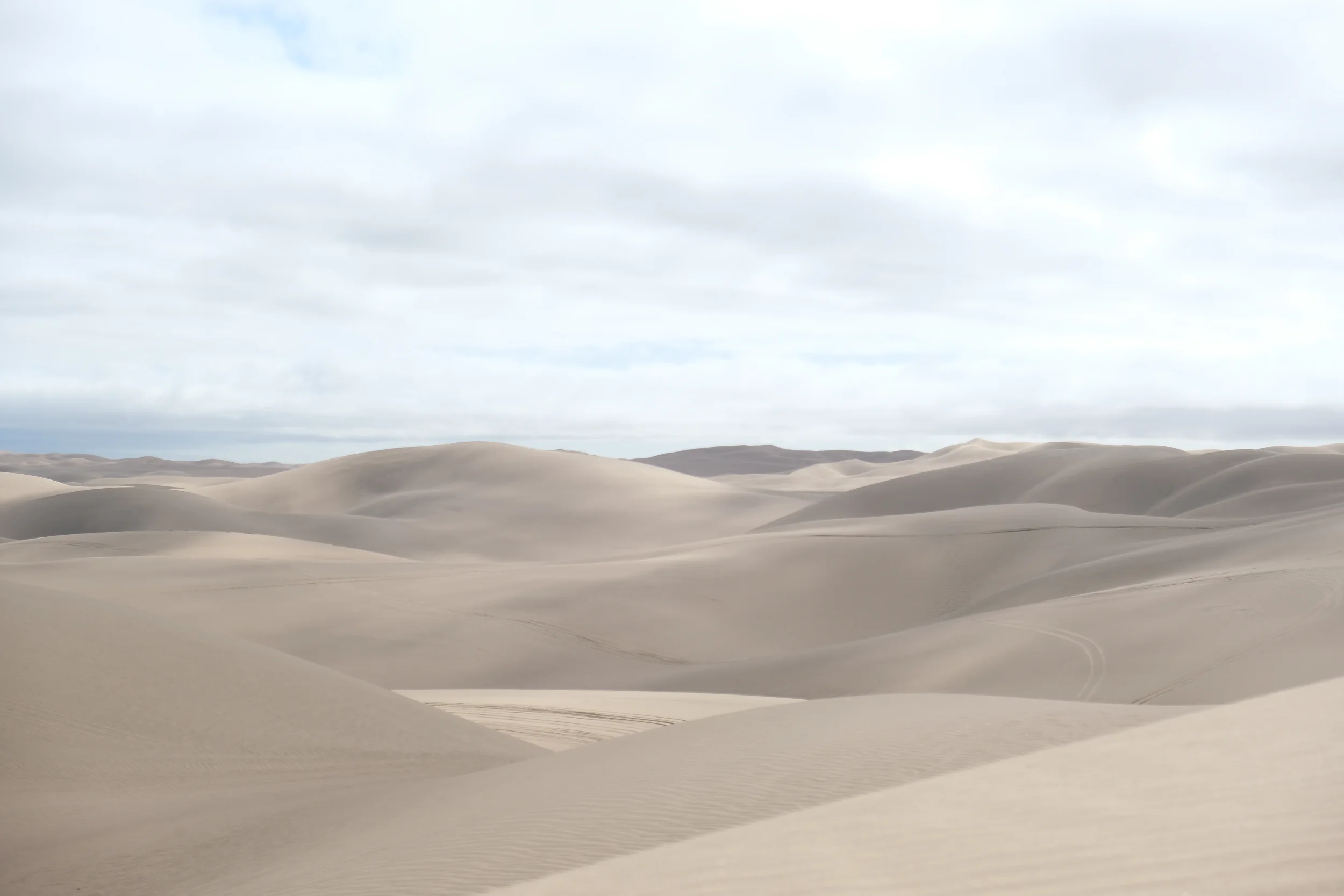
A total shift in scenery: from red desert to Atlantic coast. Sandwich Harbour, where towering dunes drop straight into the ocean, is one of the only places on Earth that looks like this. Since self-drive isn't allowed here, we booked a guided tour to get there.
Swakopmund itself gave us a few slower days: coastal air, good coffee, a welcome break from the wheel after a week of gravel roads and early starts.
Days 9–10: Spitzkoppe & Twyfelfontein
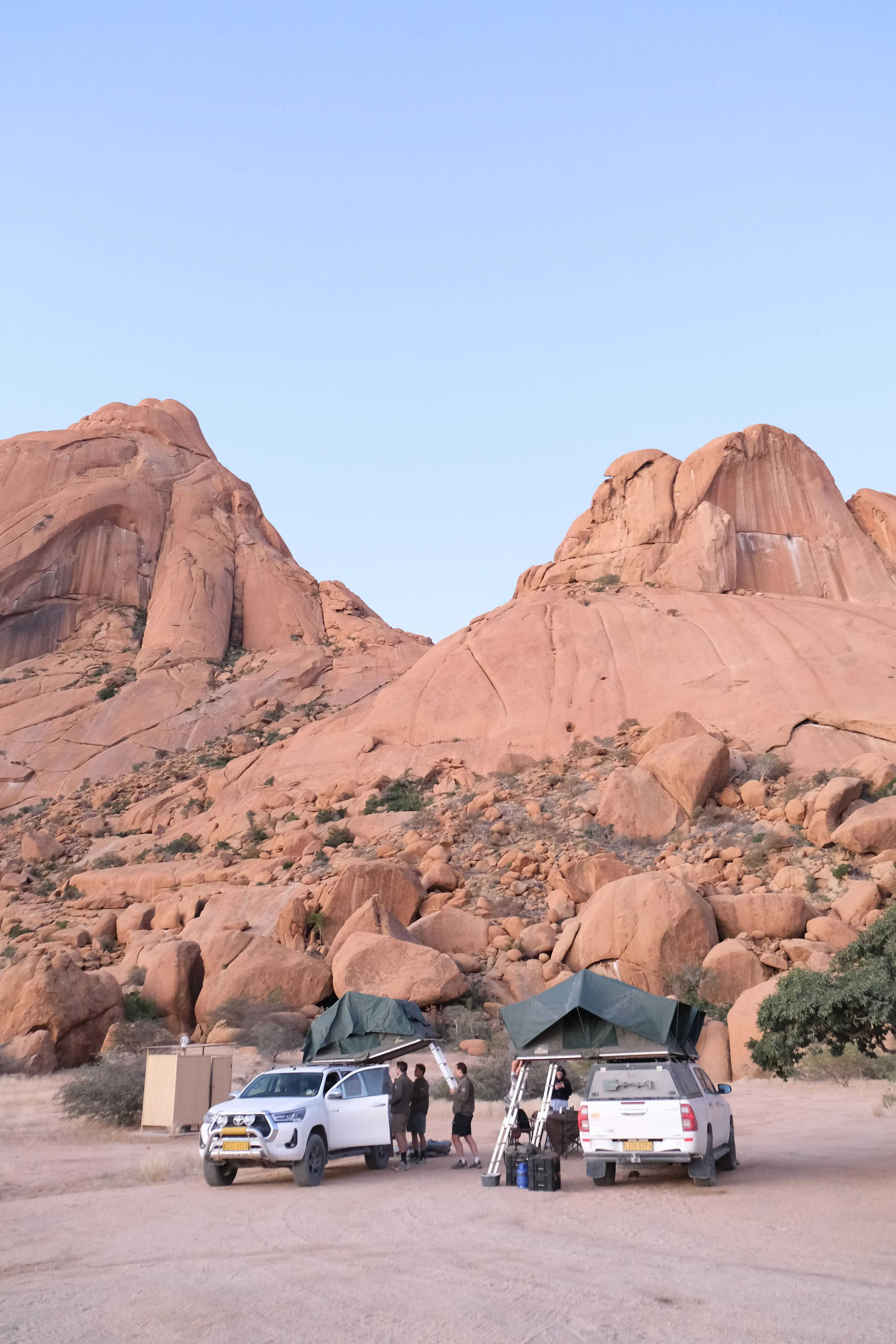
Back inland, and back to otherworldly. Spitzkoppe's granite peaks rise straight out of flat scrubland, dramatic in a way that's hard to explain until you're standing under them. We used these two days to slow the pace right down before the final push north to Etosha, wandering among ancient rock engravings at Twyfelfontein and watching the light turn the rocks orange at dusk.
Days 11–12: Etosha National Park
The grand finale. Etosha is built around its namesake salt pan, an enormous 4,760 km² expanse so large it's visible from space and makes up nearly a quarter of the park.
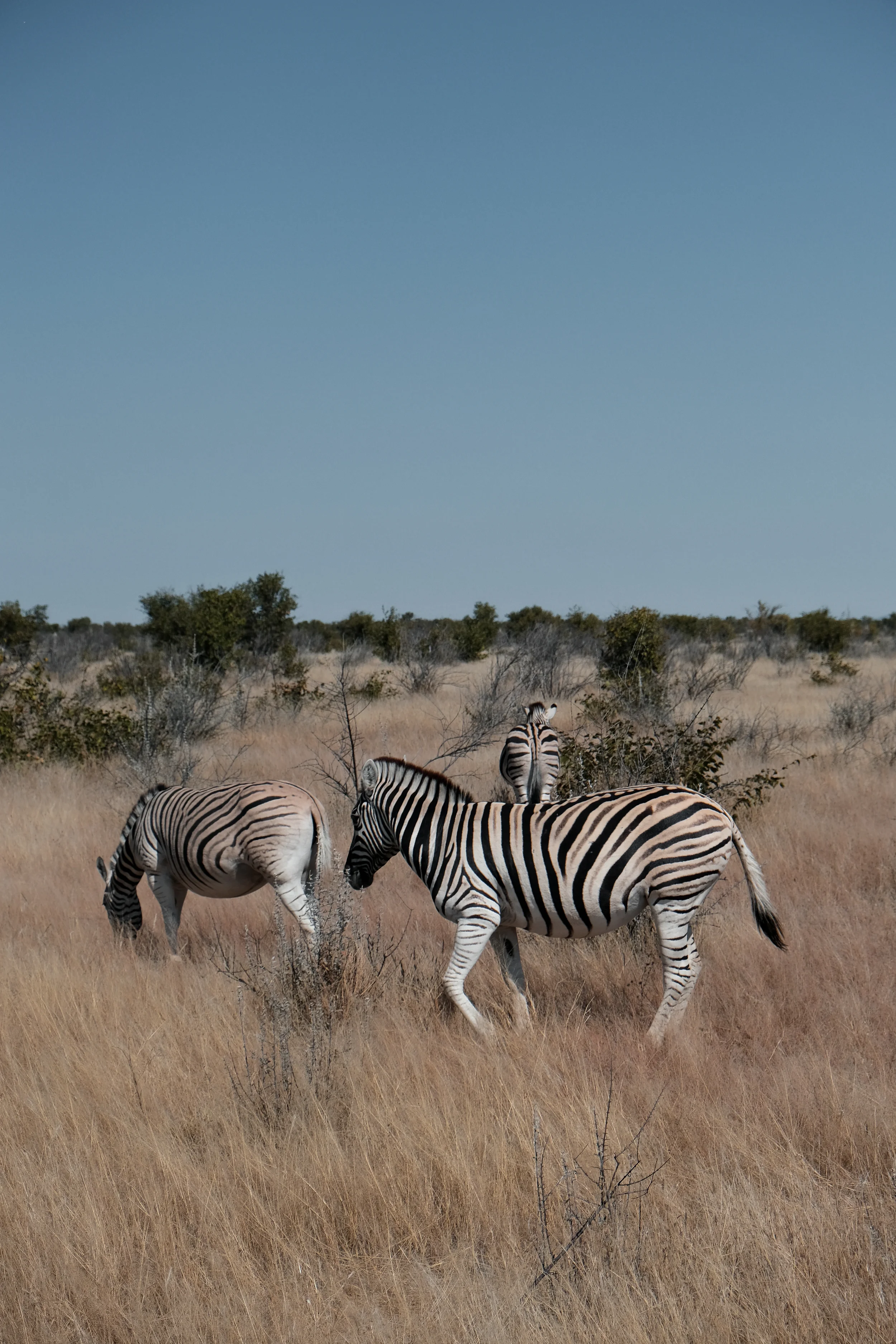
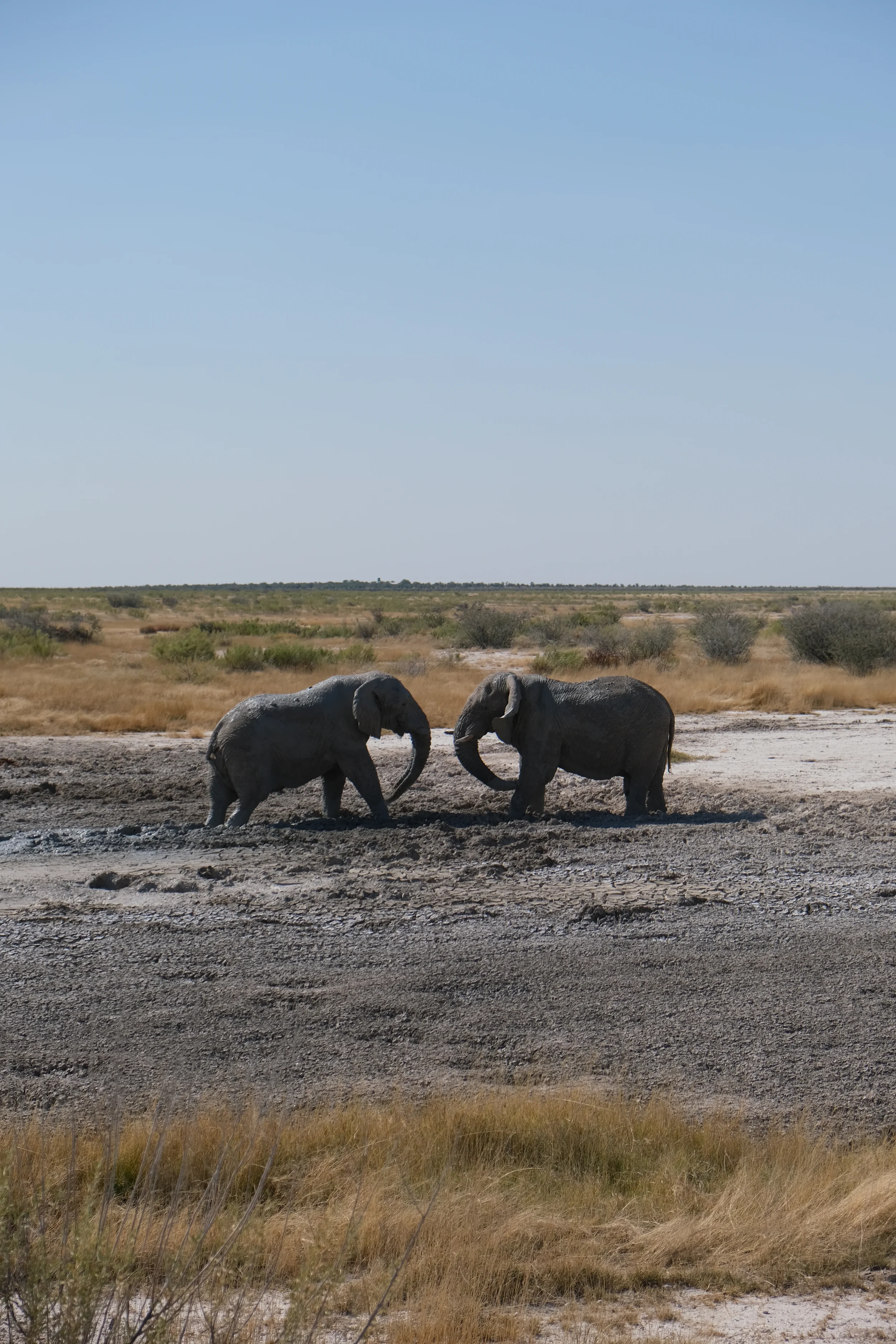
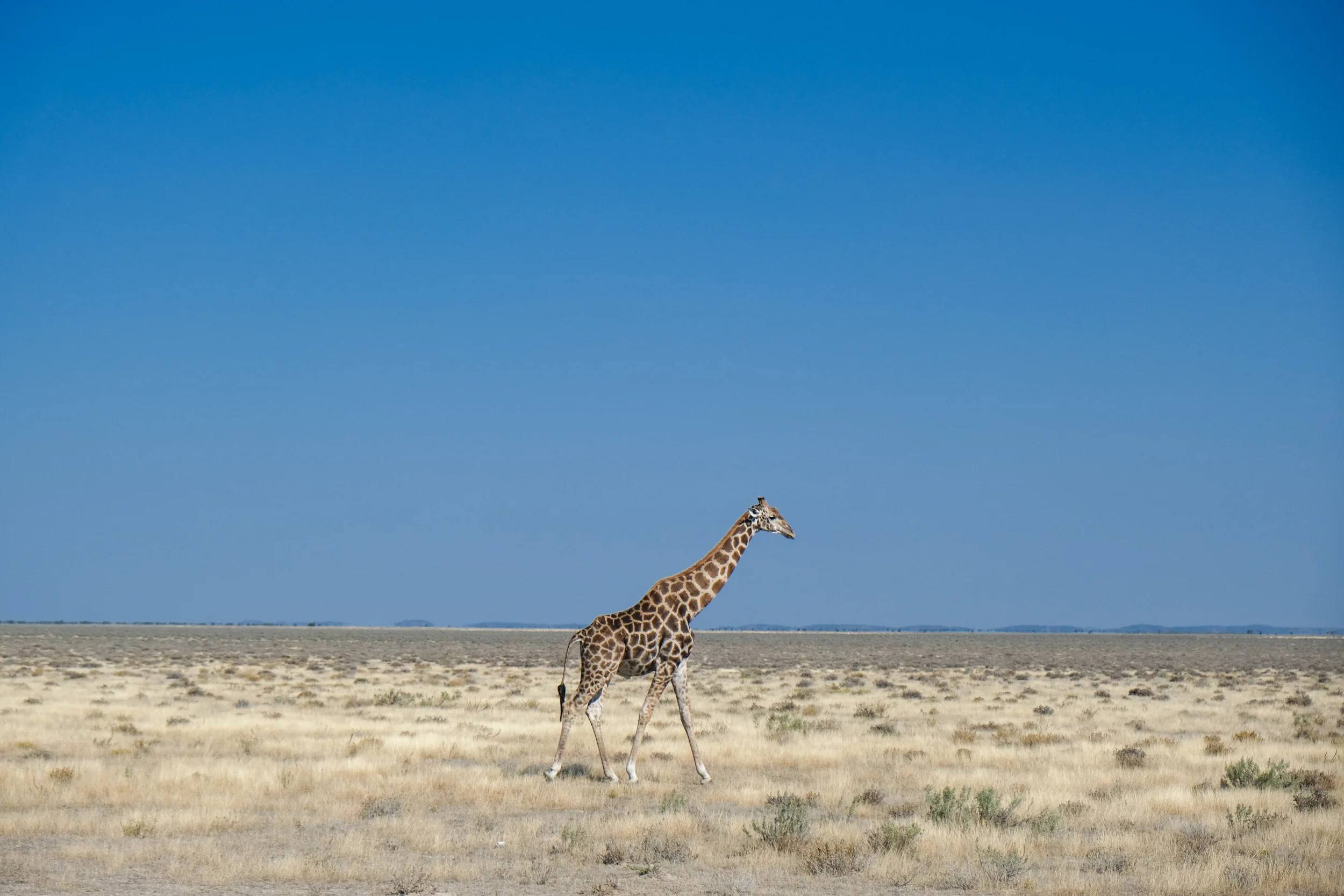
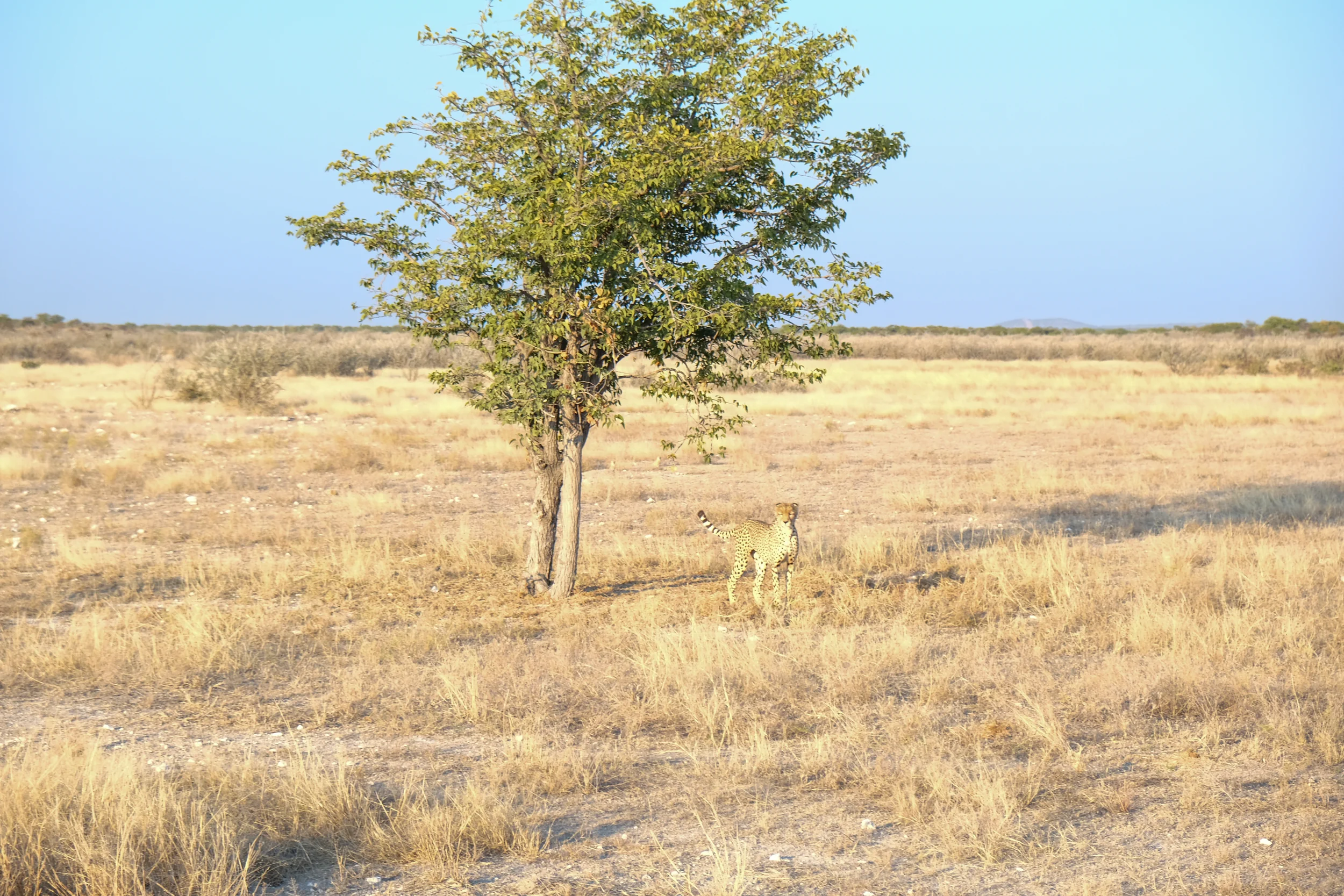
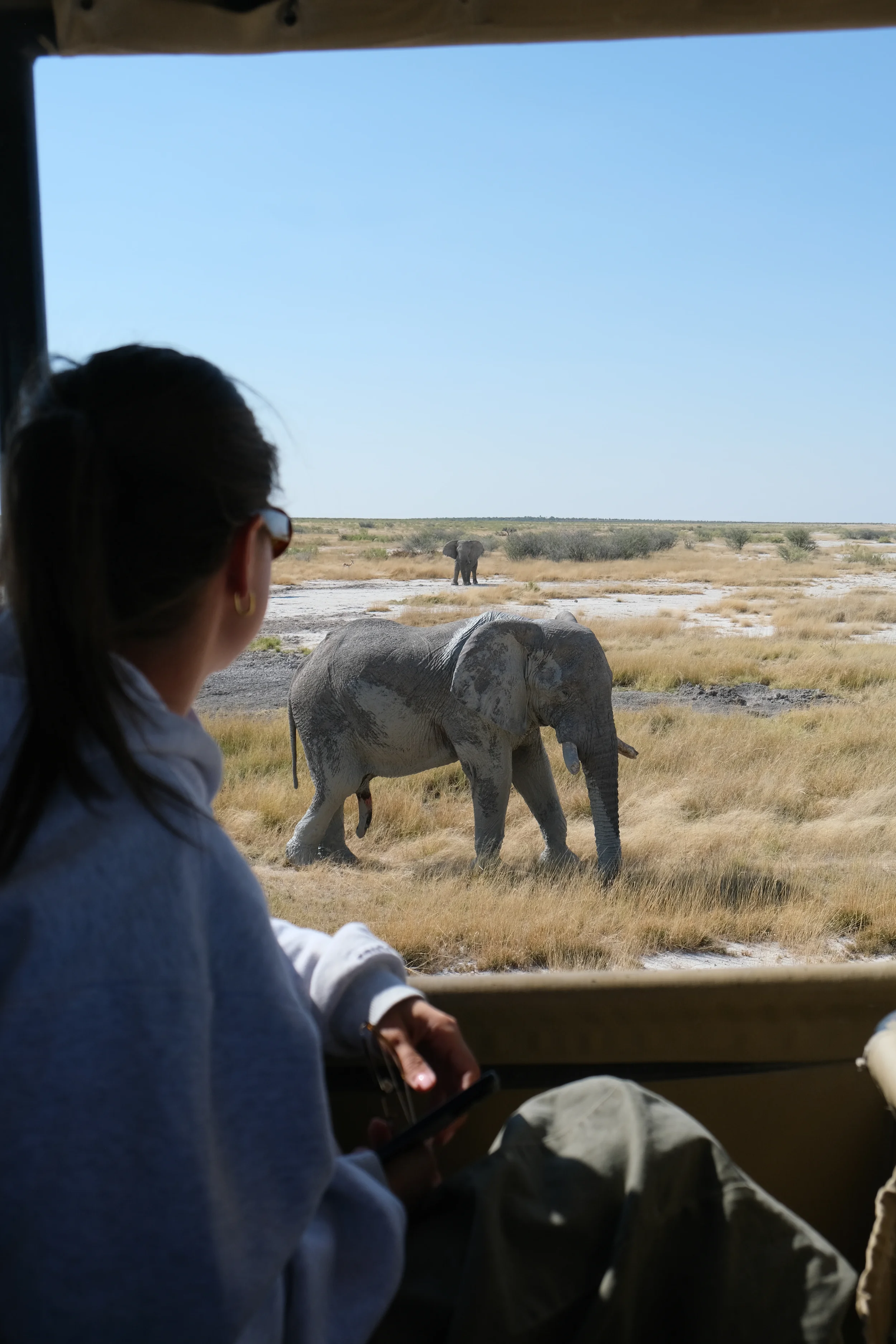
Namibia's most famous safari destination did not disappoint: we alternated self-drive game drives with one guided outing, and between the two we spotted cheetahs, zebras, elephants, rhinos, and lions, plus more springbok than we could count.
Self-drive vs. guided in Etosha:
Self-drive: Etosha is one of the most accessible parks in Africa for this — well-marked roads, waterholes you can park at and wait, and no need for a guide to have a great day.
Guided: A single guided game drive, ideally at dawn or dusk, adds local knowledge of where predators have been active. Definitely worth doing at least once, as you’ll likely see more of the rare animals that are harder to spot in the wild.
Day 13-14: Etosha Back to Windhoek
The loop closes with a long but straightforward drive back south; tarred roads for much of the way, which feels like a luxury after two weeks of gravel. It's a travel day more than a highlight, but it's also a natural moment to reflect on the trip: desert, coast, and mountains, capped off with the wildlife everyone comes to Namibia for in the first place.
On the final day, drop the 4x4 back at the rental desk, do a final gear check, and head to Hosea Kutako International Airport. Fourteen days after landing, it's strange how much of Namibia's vastness you can genuinely absorb.
And how little of it you'll forget.
Practical Tips for Planning Your Own Route
Best time to visit: The dry season, roughly May to October, gives you the best road conditions and the strongest wildlife viewing in Etosha, since animals congregate around waterholes. It's also peak season, so book accommodation and your rental vehicle well in advance.
Car rental: A 4x4 with a rooftop tent is the standard setup for a Namibia road trip like this one. It combines mobility with flexibility to camp almost anywhere along the route. Rent and return in Windhoek to avoid cross-border fees if you're not continuing into a neighbouring country.
Budget: Obviously, this depends on the kind of trip you want it to be. Based on our experience and kind of trip — a mix of camping and lodge nights, mid-range vehicle rental — we ran in the €2,000–3,000 per person range, excluding flights and any guided safari activities you add along the way.
Driving: Don't drive after dark. Namibia's wildlife crosses roads unpredictably at night, and unlit gravel roads are genuinely dangerous once the sun goes down.
Frequently Asked Questions
How many days do you need for a Namibia road trip? Fourteen days is ideal for covering Namibia's core loop — Sossusvlei, the coast, and Etosha — at a pace that doesn't feel rushed. Seven to ten days is workable if you're willing to cut a region, but the driving distances make anything shorter feel compressed.
Do you need a 4x4 to self-drive in Namibia? Not for every road, but we highly recommend it. Main highways between larger towns are often tarred and fine in a standard car, but the gravel roads connecting Namibia's major attractions — and any sandy stretches near the dunes — really do need a 4x4 with proper clearance.
Is Sandwich Harbour accessible by self-drive? No. Self-driving isn't permitted at Sandwich Harbour; the shifting dune-and-tide terrain requires a specialised guided 4x4 tour, which also handles the tricky tidal timing involved in getting there and back safely.
When is the best time of year to do this route? May through October, Namibia's dry season, is the most reliable window — cooler temperatures, firmer gravel roads, and animals concentrated around Etosha's waterholes, which makes wildlife viewing far more predictable than in the wetter months.
Conclusion
Fourteen days. One 4x4. Some of the most otherworldly landscapes on Earth.
This route through Namibia moves from the quiet trails of Naukluft to the towering dunes of Sossusvlei, the fog-wrapped coast of Swakopmund, and the wildlife-packed plains of Etosha. It's a trip built for slowing down behind the wheel and letting the desert do the talking.
We photographed this route as part of our ongoing work capturing travel destinations and boutique hotels — see more of our work at Studio Flâneur.